


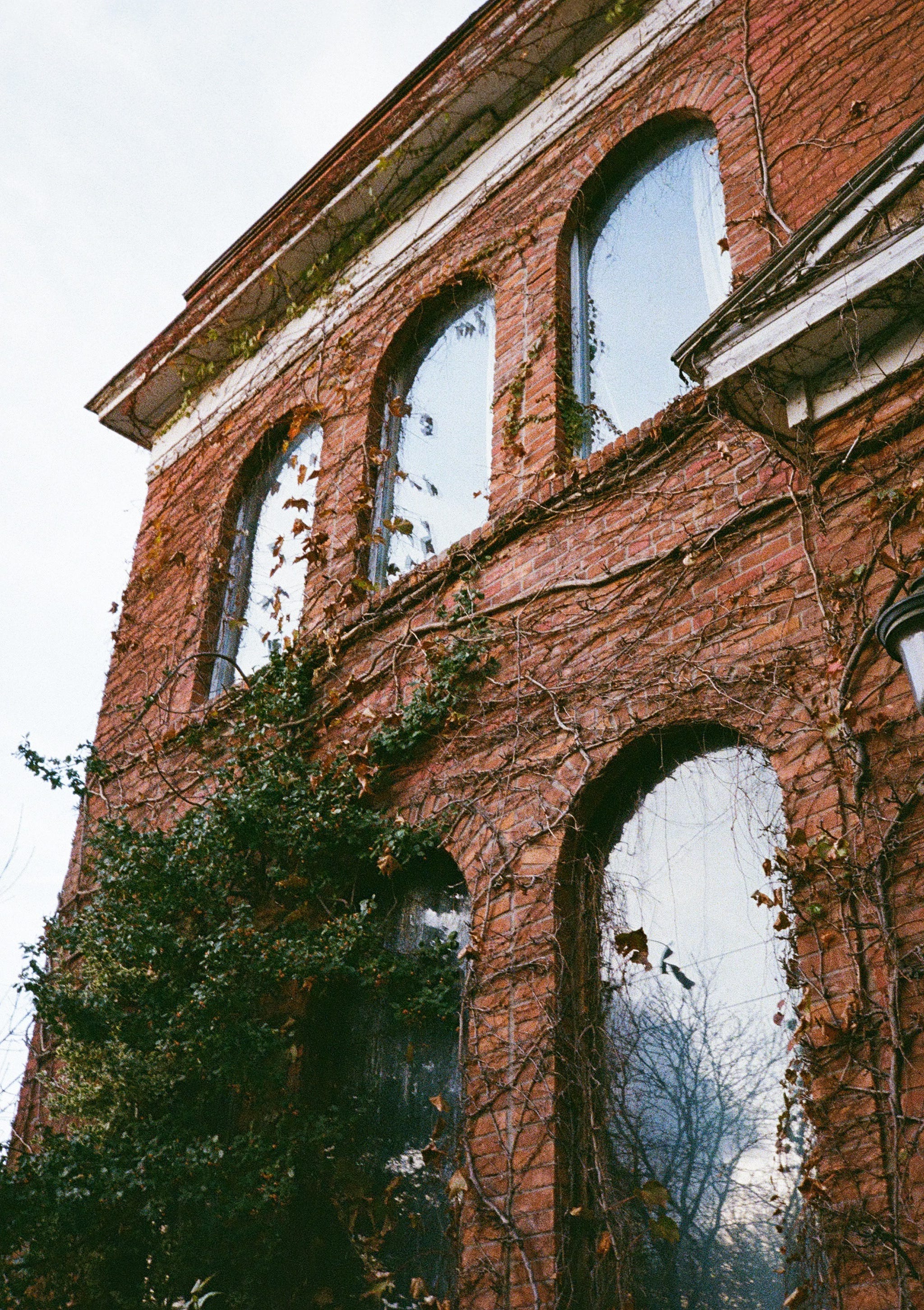
The Lit Window protocol is the container in which we’re going to do this work together. It forms the basis of my own writing practice — I do this protocol myself every working day. It is what allows me to write without suffering. It is wonderful.
There are four levels to this protocol, but the gist is this: a daily-ish combination of Coffee-Window Time, Deep Reading, and Project Work.
Here are the problems this protocol solves:
It answers the question: Did I write today? It allows you to check a box that says you have done it; you have moved forward on your writing dreams. Done. Checking this box is extremely soothing to the logical part of our brains.
It also soothes our nervous systems. I am going to say this many times and in many ways, over the course of this course: the first step in both magic and creative work is to relax. And following a protocol — especially one as delightful as this — helps our minds and bodies relax.
It allows us to accomplish a lot by doing very little, which is a daily fuck-you to the productivity industrial complex in which we live.
Magically speaking, the process goes like this:
Step into the stream (whatever you want to call it — presence, light, Reality with a capital R) and let it clear your energy.
Read your medicinal text from a place of soft-focus; inhale the words.
Exhale your own words onto the page.
I do this practice in the mornings, but you can do it any time of day. Habit stacking helps, though, so try to connect it with something that’s already steady in your life — try doing this when you wake up, or at your lunch break, or before bed (decaf, though, in that case!)
Level One: Coffee-Window Time + Deep Reading
At level one, you will do 10 minutes of Coffee-Window Time followed by 10 minutes of Deep Reading.
No writing yet. Why? Because if you’ve been all twisted up about writing for a while, guilting yourself for not writing enough (or not writing well enough), you’re probably very stressed, even if you don’t know it. Enjoying some leisurely CWT and DR for a while will fix that right up.
Also: Since we live in productivity cult hell, if you start off at level two, with project work, you may find yourself itching to race through CWT and DR and get to the work. And we absolutely do not want that.
Coffee-Window Time is the bedrock of this practice and the bedrock of the Lit Window protocol.
How to do Coffee-Window Time
To do this practice you will need a window, a place to sit, a hot beverage, and a timer that isn’t your phone. A beeswax candle and set of wooden matches are optional, but highly recommended.
Set your timer for ten minutes. Light your candle. Then: look out the window and drink your coffee.
You don’t need to do any special breathing exercises. You don’t need to label your thoughts or notice your breath or stop yourself from thinking or repeat a word to yourself or any of those meditation techniques. All you need to do is sit and look and sip your drink.
Your mind will probably wander. And then you will notice a bird or someone walking past or a gust of wind and you will come back to the present moment. And your mind will wander off again and the world will pull you back to itself.
Do this until the timer goes off.
How to do Deep Reading
Once you’ve finished CWT, grab your medicinal text. This book should not be a page turner. It should be a dense text. Something you can really sink your teeth into. It should be GOOD.
You’re going to read this book for ten minutes. Read slowly, linger on the words, but this isn’t homework — you’re not trying to analyze. You’re just soaking up some spectacular literature.
My current medicinal text is Near to the Wild Heart by Clarice Lispector. I recommend keeping a highlighter nearby. Here’s a passage that floored me this week:
However, along a natural path, if she didn’t seek an external god she’d end up deifying herself, exploring her own pain, loving her past, seeking refuge and warmth in her own thoughts, by that time already born aspiring to works of art and then serving as stale food in sterile periods. There was a danger of establishing herself in suffering and organizing herself in it, which would also be a vice and a tranquilizer.
What to do then? What to do to interrupt that path, grant herself an interval between her and herself, so that she could later find herself again without danger, new and pure?
I want to clarify that these ten minutes should not be spent in an academic fashion. You’re “reading like a writer” in the sense that you’re reading slowly, tuning into the music of it, letting it sink into your subconscious, but let your logical mind take a backseat. You don’t need to take notes. You don’t need to mine the text for rhetorical devices or consider the effects of slant rhyme. Just chill, drink your coffee, and have a read.
You might already have a medicinal text waiting for you in your to-be-read pile, but if you don't, here are a few books I’d recommend:
Autobiography of Death by Kim Hyesoon and translated by Don Mee Choi
I Who Have Never Known Men by Jacqueline Harpman
The Evolutionary Revolution by Lily Hoang
That’s it, for level one. Ten minutes of Coffee-Window Time, ten minutes of Deep Reading. Checkmark. You’re done.
Level Two: The Addition of Project Work
Before I explain what project work is, let me share my philosophy on how to decide when it’s time to move up to the next level.
I often get frustrated with books and courses that recommend I stay at the first level for as long as possible. What makes the most sense for me is to follow my excitement — that dopamine! — and dive right in while I’m focused.
So what I’m going to recommend is that you follow your heart and play at whatever level feels right to you. AND — if and when you start to feel overwhelmed, or like it’s too much, or life hits you with the big life stick, you just go back down to whatever level feels good.
I want level one to be your safe place. For the most part, no matter what’s going on, you can look out the window. For the most part, no matter what’s going on, you can read a poem or a line of text. You can drop it allllll the way down to one minute of window and one minute of reading. Okay? I can’t tell you how beneficial this practice is. It will bring you back to yourself.
Your Project
You might already have a project on the go. Maybe you’re working on a novel or a collection of poems or essays or maybe you’re trying to get a Substack off the ground or something. It doesn’t really matter what the project is. What matters is that you’re going to be working on this project for fifteen minutes immediately following CWT and DR.
Again — you can reduce the time. Even one minute of project work will keep you connected to what you’re writing. But I recommend aiming for fifteen minutes. You can get a remarkable amount done in that time.
What counts as project work? Here’s how I approach it for myself: if I am sitting at my desk, scrolling through my novel, thinking about it, looking at it, that counts as project work. I am IN THE PROJECT for those fifteen minutes. Sometimes I write 750 words. Sometimes I write seven words. It doesn’t matter. Fifteen minutes and I’ve checked the box.
You might be thinking — fifteen minutes? That’s not nearly long enough! And I will tell you that my preference is to write for longer, and I usually do. But my baseline checkmark is fifteen minutes for my novel to feel nourished and cared for and alive. Which means that even on days in which I sleep in or life goes off the rails, I’m still novel-ing.
You can write for longer. But at level two, you get your gold star for 10 minutes of Coffee-Window Time, 10 minutes of Deep Reading, and 15 minutes of project work.
If You Don’t Have A Project
Make one up. It can be a for-funsies project just based on this course. Perhaps you might want to create:
A package of five polished poems to send out to literary magazines
A short story
A short story collection
A personal essay
A set of three blog posts
A poetry chapbook
A novelette or novella
It doesn’t have to be brilliant. You don’t need to re-invent the wheel. The key here is that you have a vision for what it will mean for this project to be finished. Eventually, after some or many mornings with your coffee and your candle and your timer, it will be done.
Level Three: The Addition of Extended Project Work
You’ll know you’re ready for level three when A) you feel solid and grounded in your CWT and DR practice and B) you start feeling itchy for more writing. When the anxiety you may have felt around writing has begun to melt away and the page has started to feel like a safe (and maybe exciting) place.
Extended Project Work is an additional writing hour that you schedule for yourself, ideally at the same time each week. Unlike Coffee-Window Time and Deep Reading, which are daily practices, this is an appointment that you will put in your calendar. It’s a meeting you schedule with yourself.
This has several benefits:
It allows you a container of time in which you can sink deeper into your project.
It teaches your body that your writing is important and worthy of an appointment.
I schedule extended project work on Friday mornings because that’s the day my partner takes the kiddo to school. So on Fridays, I do my usual Coffee-Window Time, Deep Reading, and then I’ll do an hour of project work. But if it works better for you to do extended project work at a time period that’s separate from the other practices, that’s okay, too.
Extended Project Work is the exact same thing as your normal fifteen minutes of project work, but it lasts a full hour. Remember that as long as you’re in your project — sitting at your desk, being present with it — you’re doing it. You don’t need to be typing the entire time.
Level Four: The Addition of Quarterly Retreats
First: Don’t panic. I’m not saying you need to take an expensive vacation four times a year. But at level four, you will schedule a full writing day for yourself once per season.
This might mean booking off a day to work on your writing in your own home every quarter. This might mean booking an Airbnb. This might mean signing up for an in-person retreat somewhere, or a virtual retreat. It might mean booking a free study room at the library. It might mean booking a hotel room. It might mean borrowing a friend’s apartment so you can have a change of scenery. The point is that four times a year, you will schedule a full day — let’s say eight entire hours — in which you can write, read, dream, and be fully immersed in your imagination.
You will know you’re ready for Level Four when A) the other practices are solidly integrated in your life and B) Level Four sounds delicious and not terrifying. Seriously — I don’t want anyone to push themselves with this. It’s a gentle process, a spiral upward. Give the first few levels time to work their magic on you. But eventually, these retreats will become the supportive columns holding up the roof of your writing life.
Your Assignment for This Week
Select and acquire a medicinal text.
Begin Level One. Do Coffee-Window Time and Deep Reading five times. Notice how it makes you feel.
Share your reflections on this practice in the comments.
I’m here to answer your questions! Let me know if you get stuck.
What’s Next
On Friday January 23rd, I’ll post the next chapter of Lit Window, which is about the Earth element. While the Lit Window Protocol is about how to write — as in how to physically move from not-writing to writing — the following chapters will be a mix of metaphysical/magical instruction on the actual craft of writing. So fear not, friends — we’re just beginning.